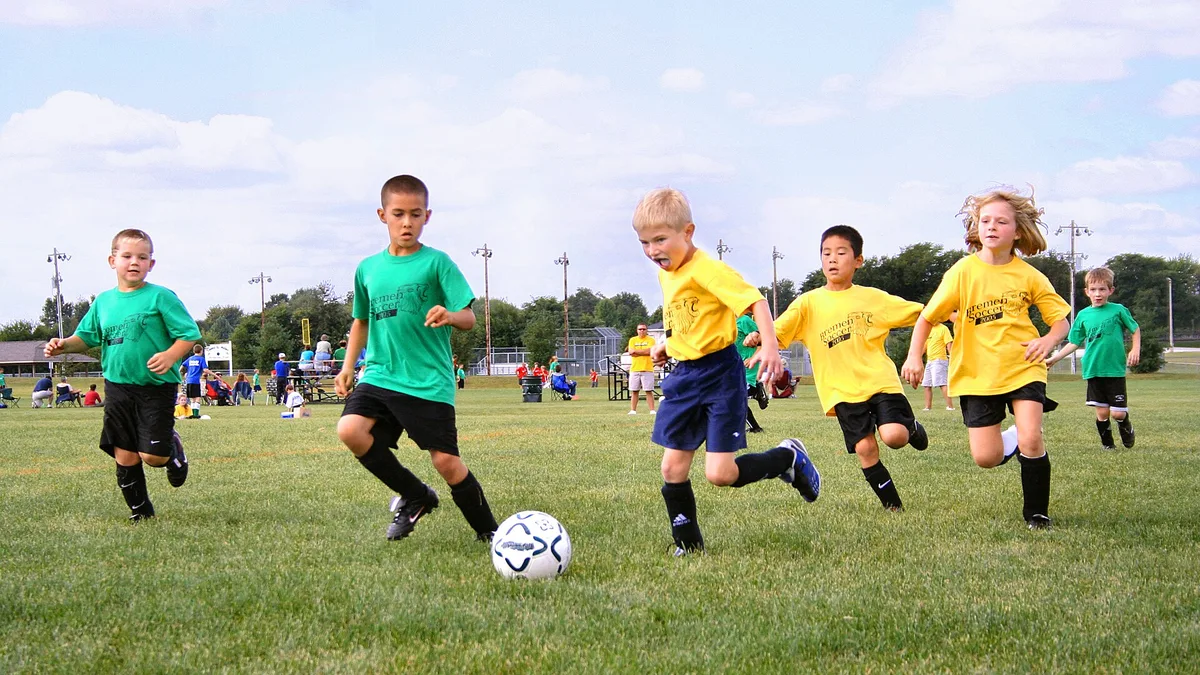
Sport
| Sport | Athletics |
|---|---|
| Country of origin | Ancient Greece |
| First created | 8th century BC (as organized festival) |
| Original use | Religious festival and competition |
| Primary governing body | International Association of Athletics Federations (IAAF) |
| Major competitions | Olympic Games, World Championships |
| Core disciplines | Track events, field events, road running, race walking |
| Venue type | Stadium, track, cross-country course |
Origin and history
Sport, as a formalized concept of organized physical competition or activity, originates from ancient civilizations across multiple continents. The earliest documented evidence of sport comes from ancient Egypt, with depictions of wrestling and athletics dating back over 4,000 years. In ancient Greece, the establishment of the Olympic Games in the 8th century BC provided a foundational model for structured athletic competition with defined rules and cultural significance. Similarly, ancient Mesoamerican cultures like the Maya played ritual ballgames as early as the second millennium BC. The codification of modern sports largely began in 19th century Britain, where standardized rules for activities like football, rugby, and cricket were developed and disseminated. This period saw the transition of many traditional games into the regulated, institutionalized forms recognized globally today.
What it is for
Sport serves the primary function of providing structured physical contest, testing skill, strategy, and physical capability within a defined framework of rules. It exists to foster physical health and fitness among participants through systematic training and exertion. A core purpose is to offer entertainment and communal engagement for spectators, creating shared cultural experiences and narratives. Sport functions as a vehicle for teaching discipline, teamwork, perseverance, and respect for opponents through its inherent challenges. It provides a platform for the pursuit of excellence, pushing the boundaries of human physical potential and achievement. Furthermore, sport acts as a symbolic arena for representing communities, cities, and nations, often serving as a proxy for non-violent competition and diplomatic engagement on the international stage.
Overview
Sport encompasses a vast array of activities, broadly categorized into team sports, individual sports, and combat sports, each with its own specific objectives and governing bodies. Its global infrastructure includes international federations, national organizing committees, professional leagues, and amateur clubs that oversee competition and development. The practice of sport operates at levels ranging from casual recreation and youth participation to highly specialized professional athletics requiring full-time dedication. A universal characteristic is the adherence to a formalized set of rules that ensure fairness, define victory, and allow for the comparison of performances across time and location. Major multi-sport events, such as the modern Olympic Games and various World Championships, represent the pinnacle of this organized system, drawing worldwide attention. The ecosystem also includes crucial supporting fields like sports science, medicine, coaching, journalism, and venue management, which are integral to its operation.
What to know
Understanding sport requires recognizing the absolute authority of its rulebooks and refereeing bodies, whose decisions are final and define the legitimate parameters of play. Knowing the role of major international federations, such as FIFA for football or World Athletics for track and field, is essential as they set global standards and organize premier competitions. It is important to grasp the distinction between amateur and professional status, as this governs athlete compensation, eligibility for certain events, and the structure of career pathways. The pervasive influence of sports science on training methodologies, nutrition, injury prevention, and equipment technology is a fundamental modern component that shapes performance outcomes. One should be aware of the ongoing ethical challenges, including doping, match-fixing, and corruption, which are persistent threats to the integrity of competition. Finally, the significant economic scale of major sports, involving broadcasting rights, sponsorship, merchandise, and stadium revenues, is a dominant force influencing decisions and priorities within the industry.
Common questions
What defines an activity as a sport rather than a game or recreation? The consensus typically requires elements of physical exertion, skill, competition, and a standardized set of rules governing play. How are new sports recognized and added to major events like the Olympics? This involves a formal process by the International Olympic Committee, considering global participation, governance, and the sport's appeal. Why do rules differ slightly between governing bodies for the same sport? Variations often arise from historical development, regional preferences, or adaptations for different age groups or competition levels. What is the process for a world record to be officially ratified? It must be achieved under specific conditions approved by the relevant international federation, with verified timing or measurement and post-event drug testing. How do sports organizations address athlete safety and concussion protocols? This is an evolving area, with governing bodies implementing increasingly strict return-to-play guidelines and rule changes to minimize risk. What is the pathway for a young athlete to become a professional? It generally involves progression through youth academies, collegiate athletics, or developmental leagues, requiring significant financial and time investment from an early age.
Pros and cons
The primary advantage of sport is its proven capacity to improve physical and mental health for participants, promoting cardiovascular fitness, strength, and psychological well-being through structured activity. It builds valuable social cohesion, fostering community identity and bridging cultural divides through shared passion and collective experience. For individuals, it can provide a powerful framework for personal development, teaching resilience, goal-setting, and the ability to work within a team structure. A significant con is the high risk of acute and chronic physical injury, ranging from minor sprains to debilitating, long-term conditions like chronic traumatic encephalopathy in contact sports. The intense pressure to win can corrupt its foundational ethics, leading to widespread problems with performance-enhancing drugs, institutionalized cheating, and the exploitation of young athletes. Furthermore, the professionalization and commercialization of sport can distort its original participatory spirit, creating massive financial inequalities and prioritizing revenue over athlete welfare and fan accessibility.
Who it suits
Sport ideally suits individuals with a natural inclination for physical activity and a competitive mindset, who thrive on measurable improvement and the challenge of contest. It is well-suited to those who value structured social interaction and the camaraderie of working toward a common goal with teammates, finding motivation in group dynamics. People who benefit from external discipline and routine often excel in sports, as the rigorous demands of training provide a clear framework for daily life. Conversely, it is less suited for individuals seeking purely solitary, non-competitive pursuits or those who have a low tolerance for repetitive practice and delayed gratification. Those with a high aversion to physical risk or public scrutiny may find the environment of organized sport particularly challenging and stressful. Ultimately, it suits societies and communities looking for a unifying, non-verbal language that can transcend other differences, though this requires careful management to ensure inclusivity and positive values.