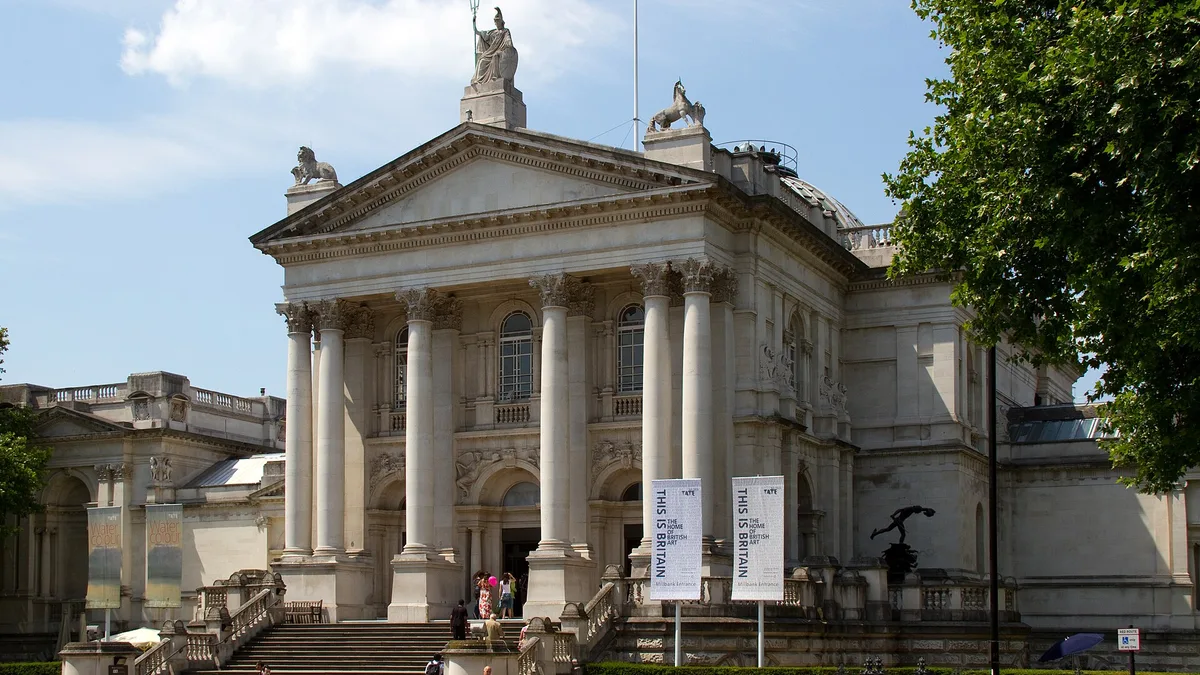
Turner Prize 2025
| Awarded for | Contemporary visual art |
|---|---|
| Administered by | Tate galleries |
| Prize type | Single annual award |
| Eligibility | Artists based or born in the UK |
| Prize form | Monetary award and exhibition |
| Selection process | Jury panel decision |
| First awarded | 1984 |
Origin and history
The Turner Prize is a prestigious annual award presented to a visual artist based in, or born in, the United Kingdom. It was established in the early 1980s, with the first prize awarded in 1984, by the Patrons of New Art, a group associated with the Tate gallery network. The award was named after the influential English painter J.M.W. Turner, a figure known for his innovative and controversial approach to landscape painting. Its creation was a direct response to a perceived lack of recognition and financial support for contemporary artists working in new and challenging mediums. The prize has been administered by Tate Britain since its inception, though the exhibition of shortlisted artists has often been hosted at other Tate venues or partner institutions across the UK. The history of the Turner Prize is deeply intertwined with the evolution of contemporary British art, frequently acting as a barometer for public and critical debate about artistic value.
What it is for
The Turner Prize is awarded to a visual artist for an outstanding exhibition or other presentation of their work in the preceding year. Its primary purpose is to promote public discussion and understanding of new developments in contemporary visual art within the UK. The award specifically focuses on recognizing artists who are deemed to have made a significant contribution to British art over the previous twelve months, with eligibility requiring the artist to be either based in the UK or born there. It serves as a major career catalyst for recipients, offering not only a substantial monetary award but also immense public exposure through the associated exhibition of shortlisted artists. The selection process involves a jury of art experts, including curators and critics, who compile a shortlist from nominations before choosing a winner. The prize aims to highlight a diverse range of artistic practices, having historically recognized work spanning painting, sculpture, installation, film, video, photography, and performance art.
Pros and cons
It provides a vital financial and reputational boost to the winning artist, often securing their position within the international art market and institutional canon. However, a consistent con is that the intense media scrutiny frequently devolves into sensationalist controversy, where complex artworks are reduced to simplistic soundbites, potentially alienating a general audience. A common mistake, often regretted by critics and the public alike, is judging the shortlisted works solely through reproductions in news media rather than experiencing the physical exhibition, missing the spatial and sensory impact central to much contemporary practice. The prize is also frequently criticized for a perceived bias towards conceptual and installation-based work over traditional mediums like painting, a point of contention that resurfaces almost annually. Furthermore, the focus on a single annual winner can create a distorted narrative of a "best" artist, overshadowing the other shortlisted contributors and simplifying the rich, pluralistic nature of the UK's art scene.
Who it suits
The Turner Prize primarily suits mid-career visual artists who have produced a significant body of work and are poised for greater institutional recognition and market success. It is particularly well-suited to artists whose practice is conceptually rigorous and who create installation-based or time-based work that benefits from the dedicated spatial and curatorial resources of a major gallery exhibition. The award also suits curators, critics, and art historians seeking to understand and debate current trends and critical directions within British contemporary art. It is less suited to early-career artists without a substantial exhibition history, as the judging criteria specifically require a notable presentation of work within the eligibility period. Furthermore, individuals seeking a consensus view on artistic quality or a purely traditional aesthetic experience may find the prize's often challenging and avant-garde shortlists discordant with their tastes. The structure of the prize ultimately suits those who believe in the value of public debate around art, even when that debate is contentious and polarizing.
Latest Turner Prize 2025 news
Latest reporting

Thélyson Orélien Novel Removed from Goncourt Longlist
The Académie Goncourt has withdrawn Thélyson Orélien's novel from its prestigious prize longlist following allegations it was AI-generated and...

Victoria Beckham firm makes first profit
Victoria Beckham Holdings Ltd made an operating profit of £7.3m in 2025, its first since the company's founding in 2008.

James Wan's Conjuring Universe Expands to HBO Max Series
The Conjuring horror franchise is being adapted into a TV series for HBO Max, set after the events of the 2025 film 'The Conjuring: Last Rites'.