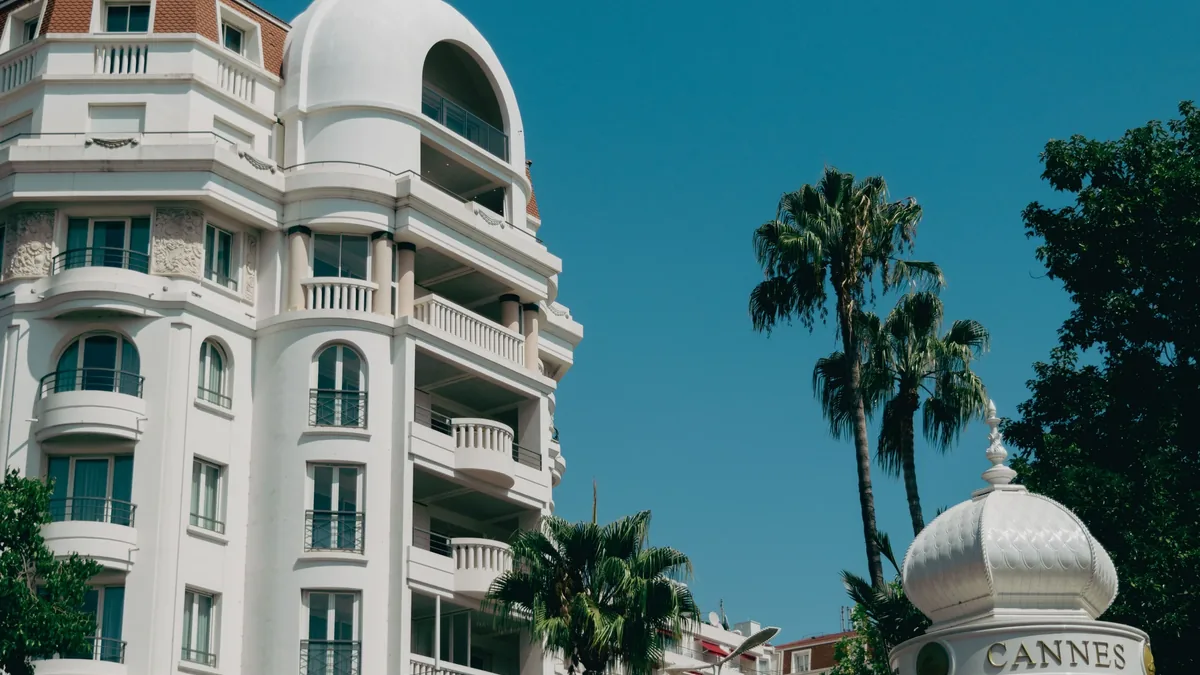
Cannes 2025
| Official name | Festival de Cannes |
|---|---|
| Founded | 1946 |
| Held in | Cannes, France |
| Primary focus | Film festival and market |
| Governing body | Festival de Cannes organization |
| Main sections | Competition, Un Certain Regard, Out of Competition |
| Main award | Palme d'Or |
| Frequency | Annual |
| Duration | Approximately 12 days |
Overview
The Cannes Film Festival is a major international film festival held annually in Cannes, France. It serves as a premier global marketplace for the film industry, where new works are premiered and commercial deals are negotiated. The event is best known for its prestigious competition for the Palme d'Or, awarded to the best film in the official selection. Beyond the competition, the festival encompasses several parallel sections, including Un Certain Regard and Directors' Fortnight, which highlight innovative and auteur cinema. The festival also hosts a large film market, the Marché du Film, which is the world's largest gathering for film industry professionals. Its primary function is to celebrate cinematic art, foster international co-productions, and set artistic and commercial trends for the coming year.
History
The festival originated in France, with its inaugural event planned for 1939 before being canceled due to the outbreak of World War II. It was successfully launched in the post-war period, holding its first official edition in September 1946. The festival was conceived as a cultural and tourist initiative to rival the Venice Film Festival and to promote cinematic art in a spirit of international cooperation. Throughout the latter half of the 20th century, it evolved from a sociable gathering into a globally influential industry powerhouse, with the Palme d'Or introduced in 1955. Key historical moments include the 1968 edition, which was halted in solidarity with student and worker protests, underscoring the festival's political dimensions. Its location in the resort town of Cannes on the French Riviera has remained constant, contributing to its glamorous reputation and logistical framework.
How it works today
The festival operates through a strict selection process where films are invited to participate by the artistic director and a selection committee. An international jury, composed of film professionals and artists appointed each year, views the competition films and awards the prizes, including the top honor. The Marché du Film runs concurrently, providing a venue for thousands of producers, distributors, sales agents, and financiers to buy, sell, and fund projects. Accreditation is tiered, separating industry professionals, press, and invited guests, with access to screenings and events tightly controlled. The physical layout is centered around the Palais des Festivals, with multiple theaters hosting simultaneous screenings, press conferences, and photo calls. The event's schedule is a dense mix of official premieres, market screenings, networking events, and parallel industry conferences focused on film financing and new technologies.
Pros and cons
A significant advantage is the unparalleled concentration of global industry talent, which facilitates networking and deal-making impossible to replicate elsewhere. The festival's prestige guarantees immediate international media attention for selected films, often defining their commercial and critical trajectory. However, the intense focus on glamour and red-carpet events can sometimes overshadow the artistic merit of smaller, less star-driven films in the selection. The cost of participation is prohibitively high for many independent filmmakers, encompassing not just travel and accommodation but also the substantial expenses of mounting a market presence. A common mistake is for producers to bring unfinished projects to the market without proper preparation, resulting in wasted resources and missed opportunities. Many first-time attendees regret their trip due to underestimating the highly competitive, schedule-driven nature of the event, where access to key people and screenings is severely limited without the right accreditation or connections.
Who it suits
The festival best suits established production companies and sales agents with finished, high-quality films seeking worldwide distribution or major festival premieres. It is ideal for A-list directors, actors, and cinematographers whose participation is sought after for the official competition and who benefit from the global spotlight. Veteran film financiers and studio executives use the event to track emerging trends, close financing gaps on international co-productions, and acquire finished films. Seasoned film journalists and critics from major publications attend to cover the premieres and industry shifts, forming a core part of the festival's media ecosystem. The market is particularly suited to producers with packaged projects featuring name talent and clear commercial potential, ready for pre-sales. It is less suited to very low-budget independent filmmakers without market-ready work or to casual enthusiasts, due to its professional focus and restrictive access policies.
Latest Cannes 2025 news
Latest reporting
Victoria Beckham firm makes first profit
Victoria Beckham Holdings Ltd made an operating profit of £7.3m in 2025, its first since the company's founding in 2008.

James Wan's Conjuring Universe Expands to HBO Max Series
The Conjuring horror franchise is being adapted into a TV series for HBO Max, set after the events of the 2025 film 'The Conjuring: Last Rites'.